Sustainable Solutions for the Plastics Industry
Conventional plastics are made from petroleum. It is well known that this comes with several drawbacks. For one thing, petroleum is a fossil fuel that is not available in infinite quantities. Furthermore, these conventionally produced plastics do not degrade naturally and thus contribute significantly to ever-increasing environmental pollution. To counteract this, there are now numerous plastics made from renewable raw materials that are completely biodegradable—so-called biopolymers.
The production of such biopolymers requires the simultaneous handling and blending of numerous raw materials—and this is exactly where AZO comes in. With our expertise in raw material automation, we are able to meet the diverse raw material requirements and contribute to the production of high-quality biopolymers.

Cellulose—fibrous and bridge-forming
Fibers such as cellulose and lignin are key raw materials in the production of biopolymers. These natural substances provide the necessary hardness and strength to the resulting plastic and are completely biodegradable.
However, these fibrous materials pose a particular challenge for raw material handling, as they are highly prone to bridging and highly flammable. When designing a plant, these raw material properties must be taken into account by incorporating the necessary explosion protection as well as appropriate solutions for discharge and conveyance.
With our discharge and conveying systems, we can reliably and efficiently feed even poorly flowing products into the process while complying with the most stringent ATEX requirements.

Starch—adhesive and flammable
Another important raw material in the production of biopolymers is starch. This raw material tends to stick, which poses a particular challenge during product discharge. However, discharge aids—such as our AZO vibrating floors—can make this process significantly easier.
However, since starch is not only adhesive but also highly flammable, special measures must be taken to prevent explosions. This means that the material must be conveyed, as far as possible, in an oxygen-free environment and without the generation of sparks or other ignition sources. This requires a special design of the entire system.
At AZO, we are very familiar with the properties of this raw material and have the right solution for every challenge you face.

Polylactide – hygroscopic
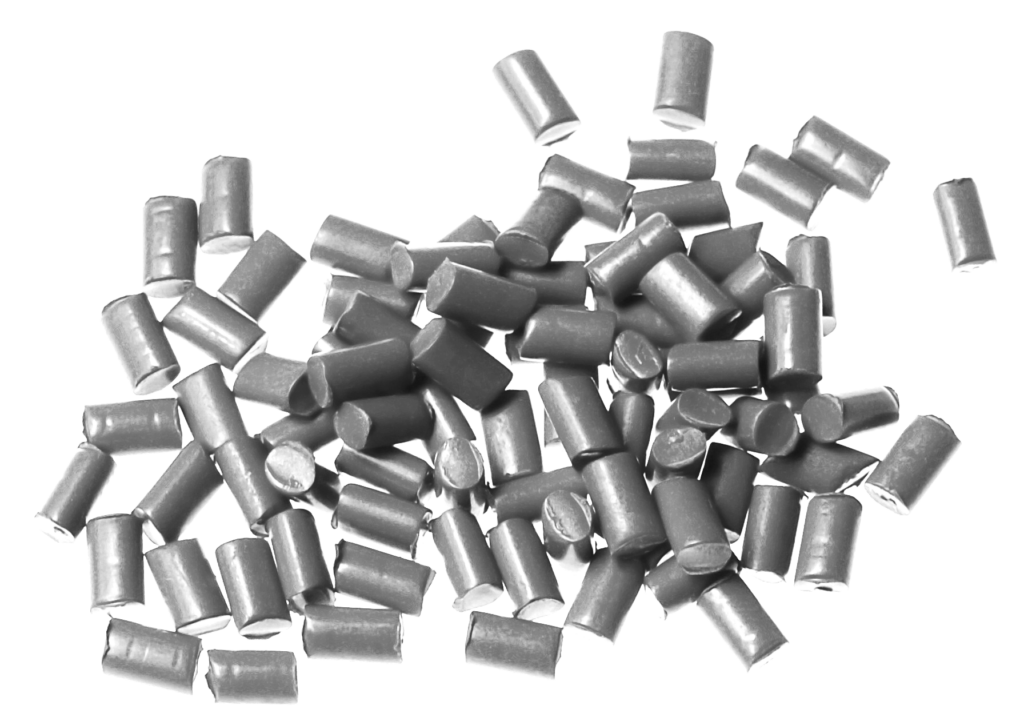
Polylactide is a polyester derived from renewable raw materials such as sugarcane or corn. This material, which is composed of lactic acid molecules, is a biodegradable plastic.
In raw material automation, handling polylactides requires special care because they are hygroscopic and must therefore be handled in an environment free of moisture.
Our AGW big-bag unloading station or our bag feeding station with an integrated glovebox and airlock chamber are therefore suitable for product feeding. This allows the product to be safely discharged from the container and transferred to the subsequent process without coming into contact with harmful environmental influences.


